




I once had a golf instructor who ruined one of my favorite excuses.
He said, “Practice doesn’t make perfect.”
I smiled.
Then he delivered the punchline.
“Perfect practice makes perfect.“
Well.
There went my plan of getting better by repeating the same mistakes thousands of times.
Turns out, if you practice a bad golf swing long enough…
Congratulations.
You’ve become exceptionally good at swinging badly.
Photography isn’t any different.
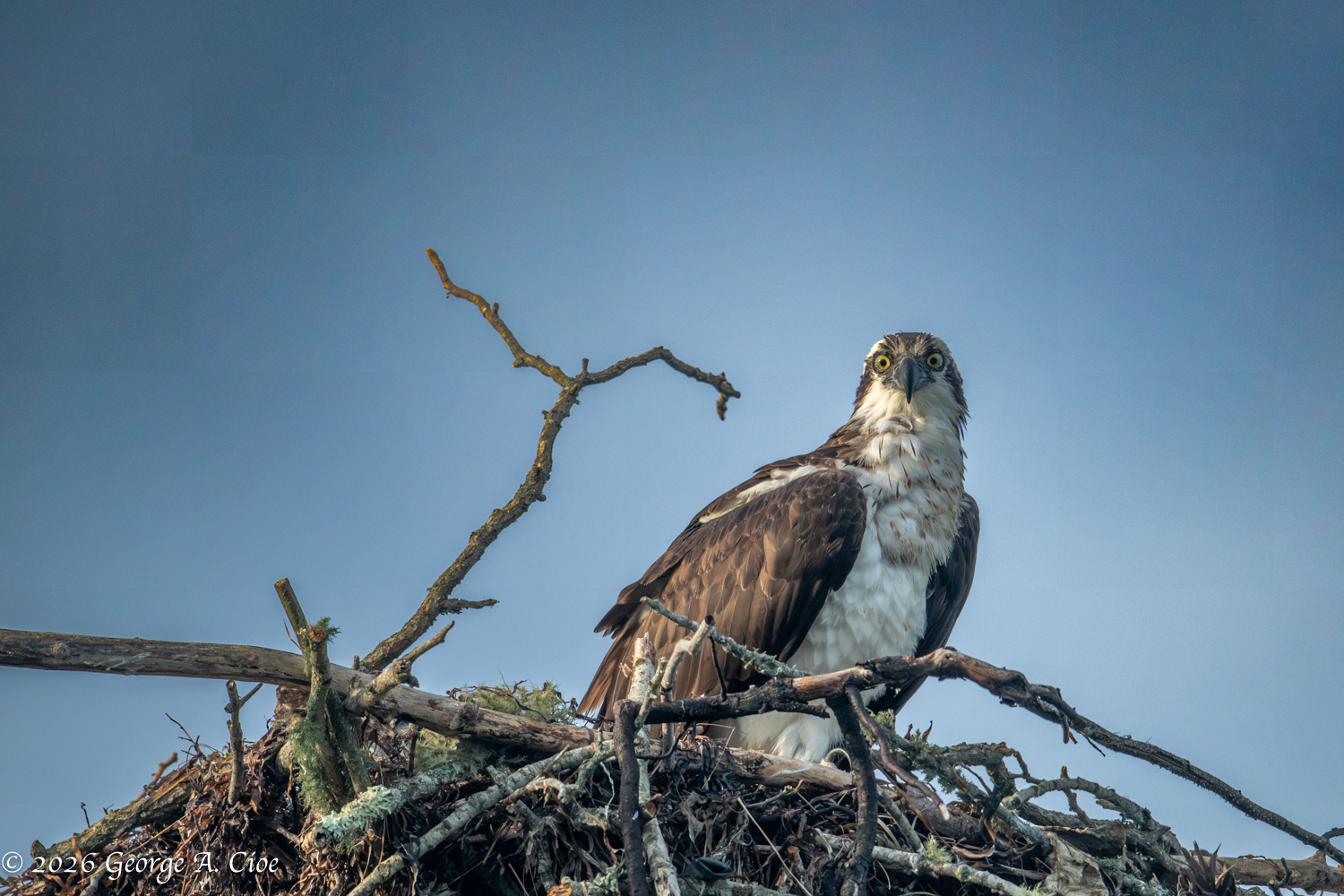
I don’t wander around with an 800mm lens hoping that one magical day an osprey will suddenly cooperate, pause in midair, smile for the camera, and autograph my memory card.
No.
I rehearse.
Over.
And over.
And over.
Which brings us to today’s unpaid photography instructor…
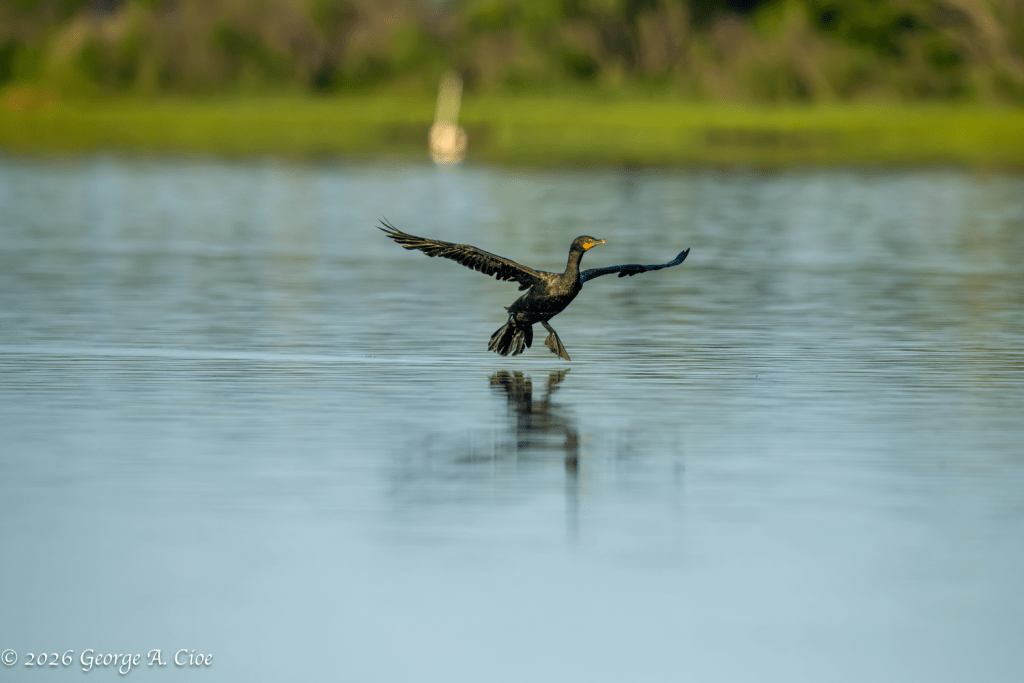
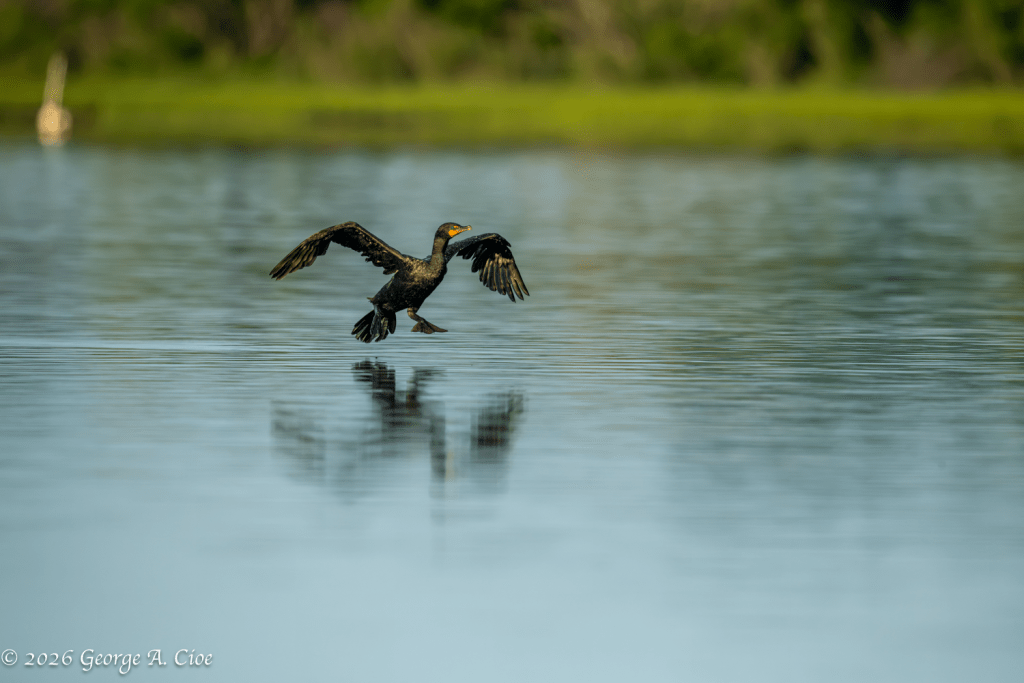
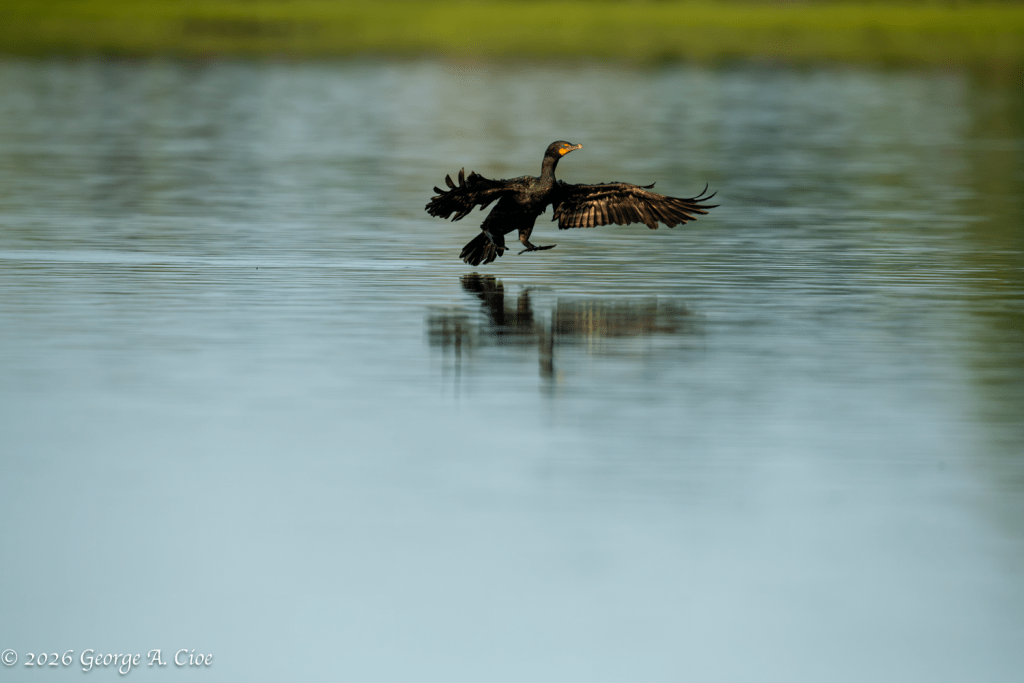
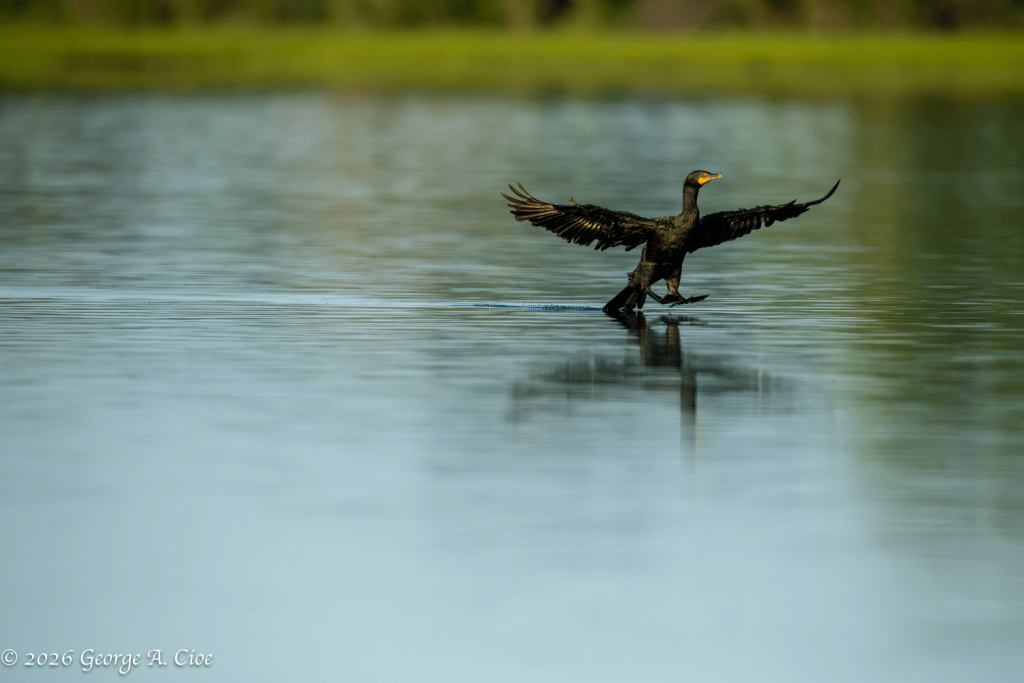
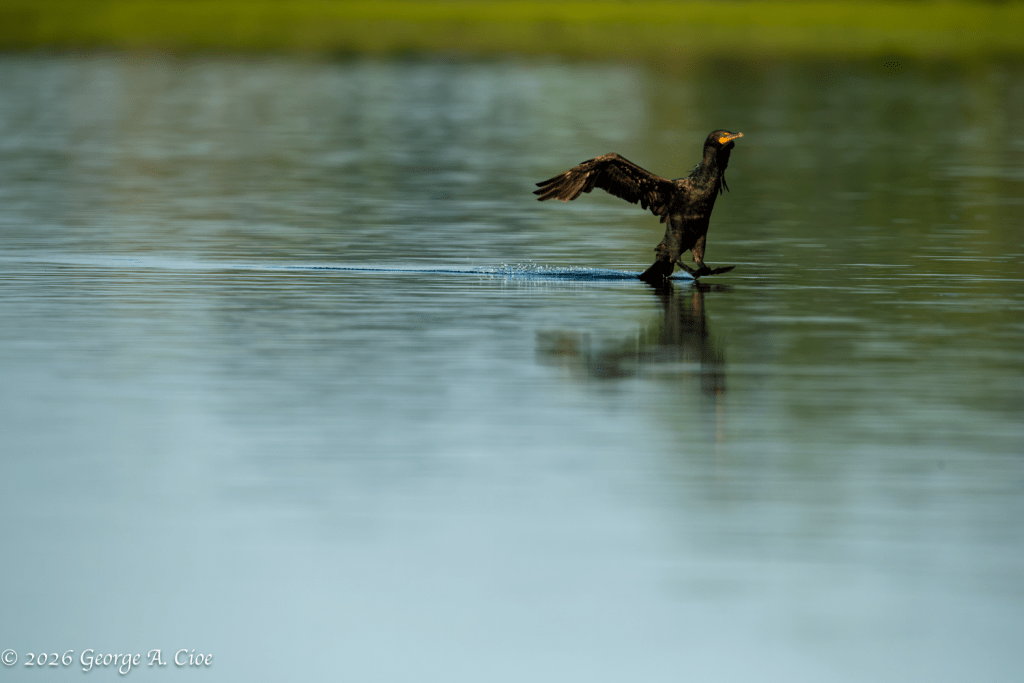
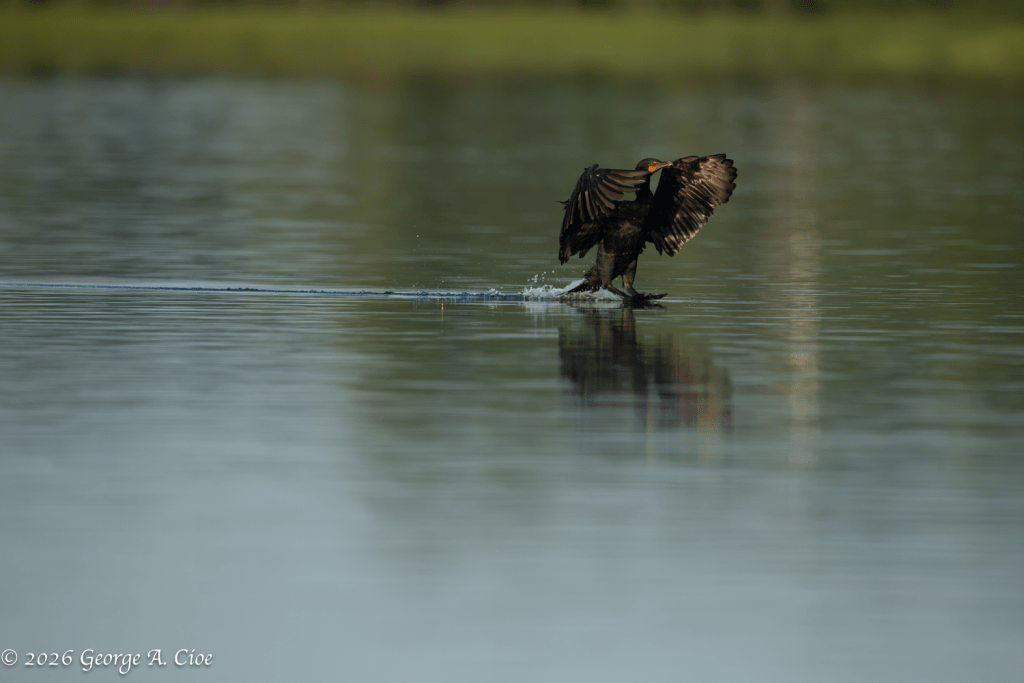
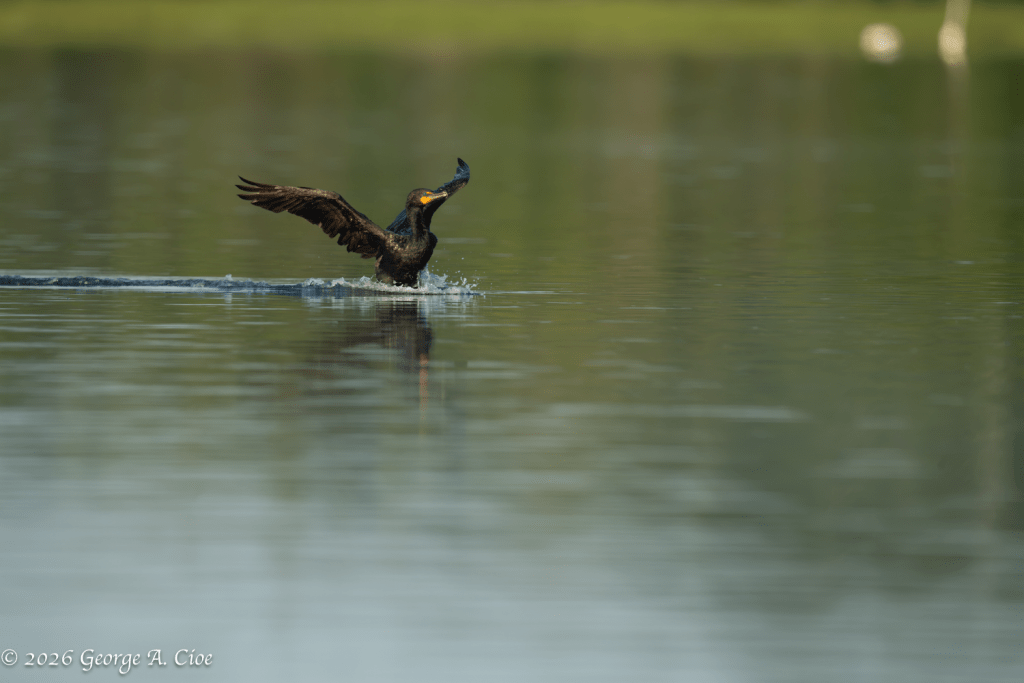
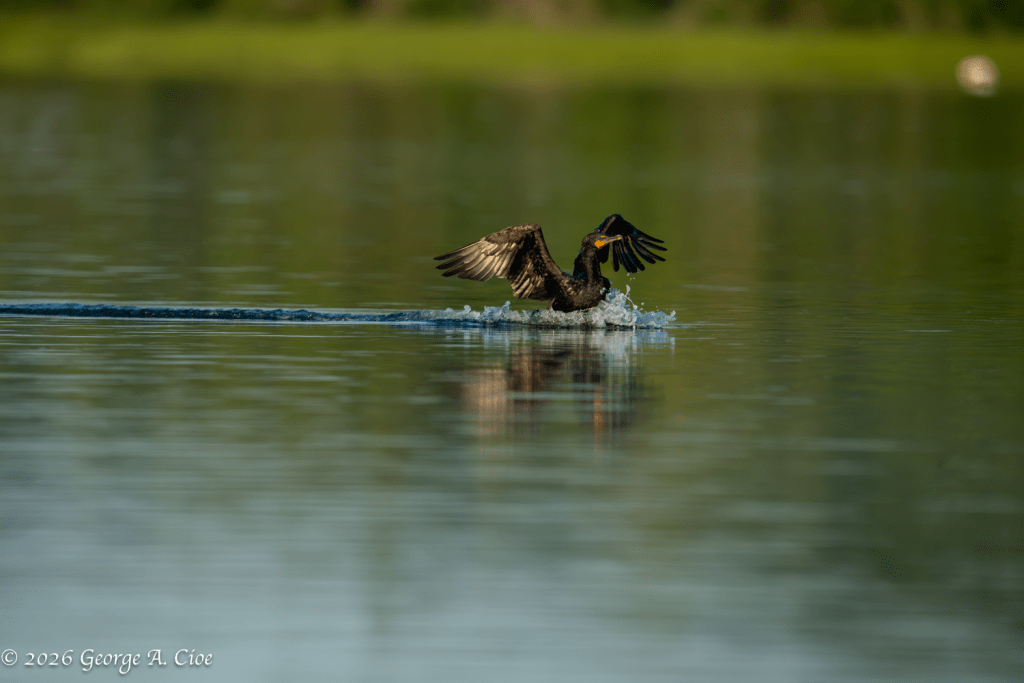
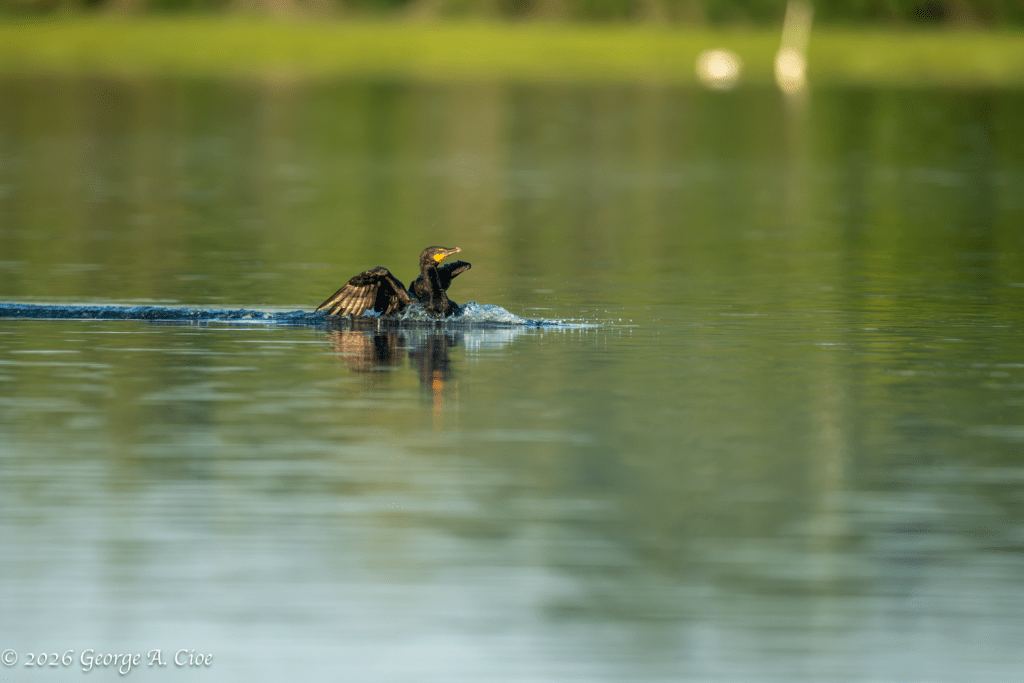
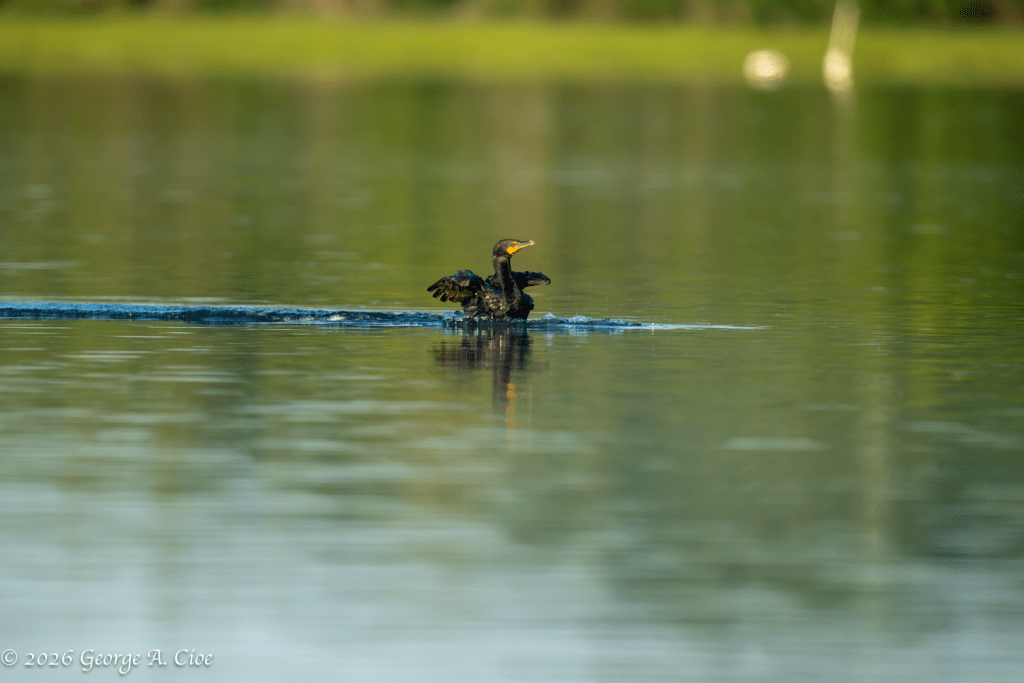
The Double-crested Cormorant.
This bird has absolutely no idea it’s participating in a master class.
It simply wanted to land.
I wanted to watch every single millisecond of that landing.
The tail feathers touched first.
Interesting.
Like the world’s first biological parking sensor.
Beep… beep… beep… splash.
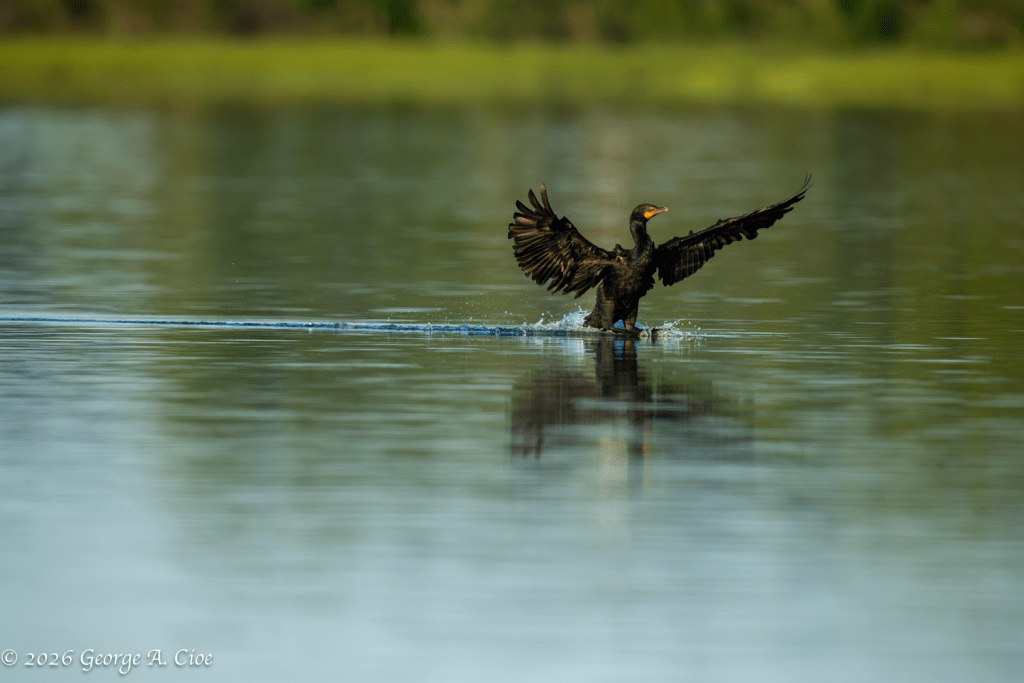
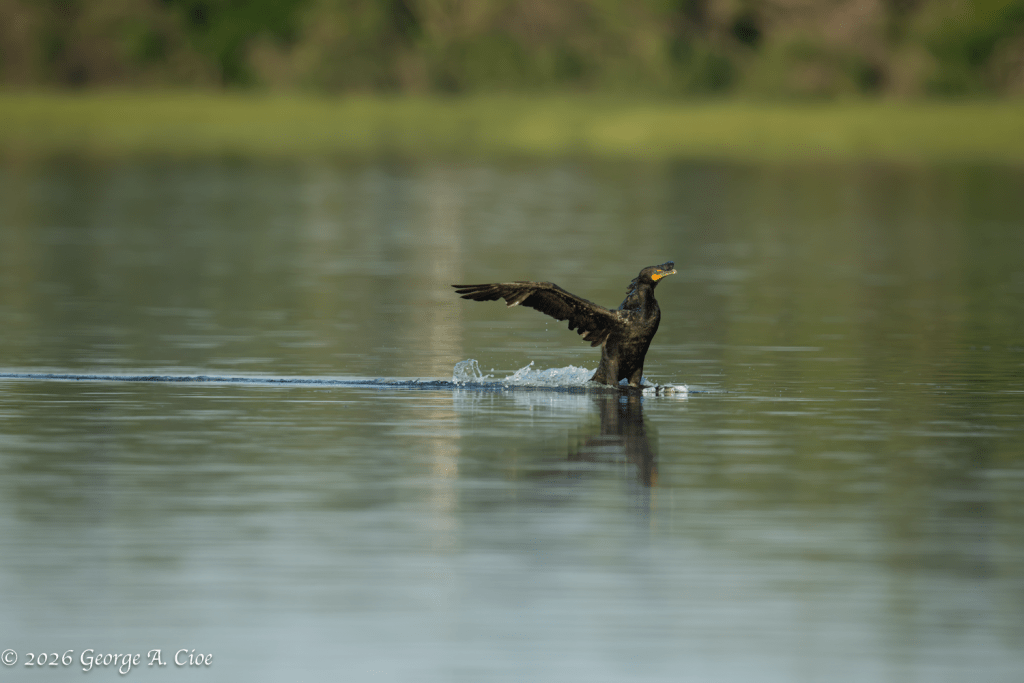
Then came the oversized webbed feet.
Skimming.
Skipping.
Throwing little rooster tails of water behind them.
The wings never stopped working.
Adjusting.
Balancing.
Correcting.
Like an Olympic gymnast refusing to let the landing cost a single tenth of a point.
Meanwhile…
I’m standing waist-deep in the Narrow River.
Lens is one foot above the water.
Waterproof tripod planted like a fence post.
Eight-hundred-millimeter lens aimed with all the seriousness of a NASA launch.
One three-thousand-two-hundredth of a second.
Nine frames every second.
Not because anyone will ever ask,
“George, exactly how does a cormorant land?”
But because I want to know.
Every pass teaches me something.
Track a little smoother.
Leave a little more room in the frame.
Anticipate the touchdown instead of reacting to it.
Avoid clipping a wingtip.
Or—my personal favorite—
Removing half the bird because I became overly optimistic about my panning skills.
Every sequence is a lesson.
Every lesson makes the next opportunity just a little better.
Someday, an osprey will fold its wings, lock onto a fish, and dive like a feathered missile.
When that moment comes, people will think I was lucky.
They won’t see the hundreds of cormorant landings…
The aching shoulders…
The wet waders…
The thousands of practice frames that never make it into a gallery.
They’ll only see one photograph.
But I’ll know it wasn’t luck.
It was perfect practice.
Or…
At least perfectly stubborn practice.
Because sometimes becoming a better photographer has very little to do with finding extraordinary birds…
…and everything to do with appreciating the ordinary ones willing to teach you.
Naturally.
I’d love to share my posts with you. If you subscribe, they’ll come straight to your inbox—most days, like a little note from me to you. It means a lot to know you’re reading along.
Browse my complete art portfolio and shop for prints at imagesbygacioe.shop
Leave a Reply